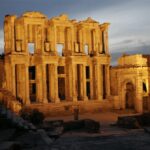
Ephesus, located on the western coast of present-day Turkey, stands as a testament to the ancient civilizations that once thrived in the region. This archaeological wonder is renowned for its rich history, remarkable architecture, and significant role in the development of ancient Greek and Roman cultures.
Originally established as an Ionian Greek city in the 10th century BC, Ephesus flourished as a major center of trade and commerce in the ancient world. Its strategic location made it a hub for cultural exchange and economic prosperity, attracting merchants, artisans, and philosophers from across the Mediterranean.
One of Ephesus’ most iconic landmarks is the Temple of Artemis, one of the Seven Wonders of the Ancient World. Dedicated to the Greek goddess of hunting, Artemis, this grand structure was a marvel of ancient engineering and religious devotion.
Ephesus also boasts the well-preserved ruins of its ancient theater, which could accommodate over 25,000 spectators and hosted performances ranging from plays to gladiatorial contests.
The city reached its zenith during the Roman period when it became the capital of the province of Asia. Under Roman rule, Ephesus underwent significant expansion and renovation, with notable additions such as the Library of Celsus, an architectural masterpiece that housed thousands of scrolls and served as a symbol of knowledge and learning.
However, with the decline of the Roman Empire, Ephesus gradually fell into obscurity, abandoned and forgotten until its rediscovery by archaeologists in the 19th century. Today, Ephesus stands as a UNESCO World Heritage Site, attracting visitors from around the globe who come to marvel at its ancient splendor and unravel the mysteries of its past. Its well-preserved ruins offer a fascinating glimpse into the daily life, art, and architecture of the ancient world, making it a must-see destination for history enthusiasts and travelers alike.